
Podcast interview transcripts can increase the visibility and traffic potential of your website in search engines, such as Google, to a certain extent by publishing transcripts on their episode websites. Unfortunately, the visibility usually settles at a level that is far too low, and publishing transcripts often raises unrealistic hopes.
But that’s not the end of the story. Fortunately, podcast transcripts have enormous potential for generating traffic from search engines. However, to exploit this potential, much more is needed than just transcripts on the podcast websites.
Let me start by saying that it’s not due to a lack of excellent content on your part. Too many content creators assume (and I used to think this way too, I’m no exception) that publishing valuable content alone guarantees sufficiently high visibility in search engines.
This article explains why publishing podcast transcripts alone is not enough to cover most of the relevant search queries in search engines and appear at the top of these search results. You will also learn what measures are important on your website so that you can maximize the traffic potential of your podcast content and transcripts.
Published transcripts bring first visibility gains
Once a podcast episode with its transcript has been indexed by search engines on a website, the first long-tail search queries trigger initial impressions and clicks. You can track this with your website account in the free Google Search Console.
How quickly your pages are indexed in Google Search also depends on how well your podcast website is linked to other thematically relevant domains. External linking is a different, sometimes very complex topic that will not be covered here.
The first clicks are rolling in, triggered by long-term search queries that not many competitors have on their radar. Expectations are raised for much more, which unfortunately too often fail to materialize.
Initial growth via Google search then stagnates

At some point, you’ve published hundreds of podcast episodes, including transcripts. The traffic from search engines isn’t increasing proportionally to the number of podcast episodes published, though.
How can that be?
Owners of websites that don’t run podcasts but receive many times more search engine traffic from Google than you do? Perhaps they invest much less time and money overall, but their visibility returns are incredibly good compared to yours. Let us explore why that’s the case.
Search intent and customized text content

When someone enters a search query into Google, they expect answers that are quick and to the point, without any unnecessary fluff. Of course, the source should be trustworthy, and you should be able to rely on the information on the website being accurate.
What Google users don’t have in mind are podcast episodes that cover many aspects of the search query but ultimately don’t do much to answer their question quickly.
If 99 percent of your podcast episode, i.e., your transcript, is not helpful to the visitor according to their search intent, Google will understandably not show you at the top of the search results, but rather search results that offer a faster and more accurate solution.
Why are raw interview transcripts not enough?
Podcast episodes are usually standalone. Although there is often a main topic for an interview or discussion, the topics tend to develop randomly. Their relevance often ends a few weeks after publication, so evergreen content that covers continuously searched terms is not usually the case.
In contrast, a clearly defined topic has a much better chance of producing structured, thematically relevant content for search intent when using Google Search.
From Episodes to Topics That Answer Real Questions
Now you have seen why raw interview transcripts are not enough to be found in search engines such as Google (and now also in chatbots such as ChatGPT, Gemini, Claude, etc.) for relevant search terms.
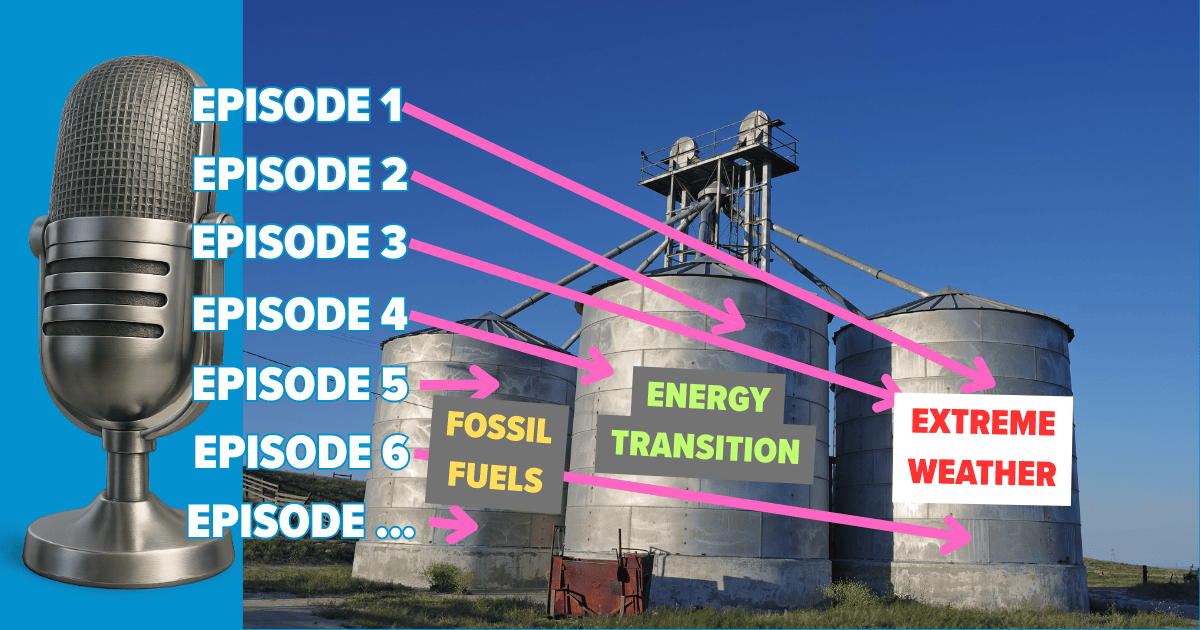
But you should also be shown a way to switch your mindset from episodes to topics by properly preparing your interview transcripts.
Here are five approaches for topics instead of episodes, although you should of course keep the episode pages for your listeners. The topics are in addition to the episode pages.
- For success in Google searches, consider your interview transcripts as rough diamonds that still need to be structured across the podcast and filtered by topic.
- Identify questions that come up in several of your podcast episodes. Use these questions as a thematic hook for a new blog post.
- Instead of using a complete interview transcript, it is better to search in your episodes for topics that span multiple episodes. Build topic pages with highly relevant conversation excerpts.
- In your episode pages, the internal links point to topics, and not the other way around.
- If interview guests are well-known, episodes such as “What Michael Example said about XYZ” are useful.